摘要
车间通信和智能驾驶的快速发展为进一步提高混合动力汽车的能源效率提供了可能. 另外, 路线的地理信息对混合动力汽车的能源效率优化有很大的影响. 本文考虑行驶路线的坡度对能源优化的影响, 提出一种基于交通信息预测的实时能源管理策略, 本策略同时对动力链和汽车的动态进行优化. 首先, 为了保证在红绿灯交通场景中的安全通过, 本文提出了基于逻辑控制策略. 其次, 考虑与前车车间距的安全性, 以实现能源消耗最小的目标, 本文形成了一个带有约束的最优化问题, 并利用极小值原理进行求解. 最优控制问题中优化区间内的前车车速是系统的外部干扰信号, 实现其精准的预测对能量优化性能的提高有着重要的作用, 本文提出一种利用实时的网联信息的基于极限学习机的预测算法. 最后, 本文建立了一个交通在环的动力链仿真平台. 所提出的算法在这一平台上得到验证, 在不同交通密度的情景中, 可以得出带有预测的能量管理策略可以平均提高17%的汽车能源效率.
Abstract
With the development of fast communication technology between ego vehicle and other traffic participants, and automated driving technology, there is a big potential in the improvement of energy efficiency of hybrid electric vehicles (HEVs). Moreover, the terrain along the driving route is a non-ignorable factor for energy efficiency of HEV running on the hilly streets. This paper proposes a look-ahead horizon-based optimal energy management strategy to jointly improve the efficiencies of powertrain and vehicle for connected and automated HEVs on the road with slope. Firstly, a rule-based framework is developed to guarantee the success of automated driving in the traffic scenario. Then a constrained optimal control problem is formulated to minimize the fuel consumption and the electricity consumption under the satisfaction of inter-vehicular distance constraint between ego vehicle and preceding vehicle. Both speed planning and torque split of hybrid powertrain are provided by the proposed approach. Moreover, the preceding vehicle speed in the look-ahead horizon is predicted by extreme learning machine with real-time data obtained from communication of vehicle-to-everything. The optimal solution is derived through the Pontryagin’s maximum principle. Finally, to verify the effectiveness of the proposed algorithm, a traffic-in-the-loop powertrain platform with data from real world traffic environment is built. It is found that the fuel economy for the proposed energy management strategy improves in average 17.0 % in scenarios of different traffic densities, compared to the energy management strategy without prediction of preceding vehicle speed.
1 Introduction
Due to the distinct advantage in fuel economy improvement and emission reduction, hybrid electric vehicles (HEVs) equipped with internal combustion engine (ICE) and electric machines for propelling the vehicles, have cached great attention in both the automotive field and the control community in the past two decades [1-3] . The energy consumption reduction of HEVs is mainly achieved by the energy management strategy (EMS) of the hybrid powertrain that distributes the power between ICE and the motor under the constraints of demand power from the driver and the powertrain dynamics [4]. Through advanced communication between ego vehicle and other traffic participants by vehicle-to-vehicle (V2V) and vehicle-to-infrastructure (V2I) , researchers can explore the potential in further fuel economy improvement of HEVs [5-6] . On the other hand, for HEV running on the hilly route, the distance-dependent slope information is a key factor in the HEV powertrain optimization [7] .
Under the assumption that total driving speed profile is pre-known and unchanged without distribution, a global optimization solution can be derived through the dynamic programming (DP) and Pontryagin’s maximum principle (PMP) by solving an optimal control problem, which is formulated for energy consumption minimization [8-9] . With consideration of on-board application, the short-term optimization strategies, such as receding horizon control (RHC) with characteristics in fast computation and robustness in dealing with the uncertain disturbance, are becoming more popular in realtime EMS [10-11] . Thanks to the advanced technology of commentation between V2V and V2I, it is becoming possible for the energy optimization of HEV with consideration of driving safety. Assuming that the total state trajectories of the leading vehicle in the predictive horizon are obtained by V2V, [12] developed an RHC-based optimal control framework to maximize the fuel economy. Further, the neural network (NN) algorithms, such as back-propagation NN and radial basis function NN were employed for speed forecasting of preceding vehicle for energy consumption optimization [13-15] . The stochastic model predictive control was also employed for EMS of HEV when the preceding vehicle speed was estimated through the Markov chain model and conditional linear Gauss model by using the V2V and V2I information, respectively [16-17] . Meanwhile, there have been some research explorations in considering joint efficiency enhancement of the vehicle and powertrain. The simultaneous optimization of a series HEV for speed profile and energy management was conducted by Chen [18] . Kolmanovsky’s group proposed a sequential optimization strategy to obtain an optimal speed trajectory and optimal powertrain operation for HEVs for improving energy efficiency and reducing emission [19-20] . The integration of vehicle dynamics and powertrain operation as an optimization problem was also explored to minimize the total consumption of fuel and electricity [21-22] .
When the departure and destination are given by the driver, the driving route is always determined. With the equipment of a global positioning system (GPS) unit with an onboard database, the geometry and topography information along the determined route is available [23] . Since the topography information, such as slope and speed limitation, is distance-dependent, the look-ahead horizon control that is seen as the receding horizon control in the space domain, is a promising approach. Nielsen et al proposed a real-time look-ahead control scheme for heavy trucks to minimize trip time and fuel consumption along the route with slope [24] . Further, the look-ahead horizon-based optimal platooning control was developed for groups of heavy-duty vehicles to maintain inter-vehicular distance and improve fuel efficiency [25] . To deal with the computation burden for the long look-ahead horizon control, an efficient bi-level algorithm was proposed for eco-driving control of ICE-propelled vehicle [26] . The concept of the lookahead horizon was introduced for the velocity planning of plug-in HEV and the state of charge (SOC) was not considered in the optimization problem [27] . Xu et al also employed a look-ahead horizon to model the ahead traffic density, which was used for the optimal energy management strategy of HEV; however, the formulated receding horizon control problem is still formulated in the time domain [7, 28] .
The contribution of this paper can be summarized as follows: 1) An optimal control problem is formulated in the space domain within the look-ahead horizon to improve energy utilization efficiency by managing powertrain operation and vehicle dynamics.2) The road slope, which is a key factor in the energy consumption of HEV, is considered in the optimal control problem.3) The preceding vehicle speed is predicted by the extreme learning machine (ELM) algorithm with real-time traffic information from V2V and V2I to deal with the outside disturbance input in the above optimal control problem.4) A traffic-in-the-loop powertrain simulation platform with real-world traffic data to verify the proposed algorithm.
The rest sections of this paper is organized as follows: In Section 2, the system modelings, from HEV powertrain to the traffic density in the look-ahead horizon, are introduced. The proposed predictive optimization algorithm, including ELM-based speed predictor and real-time optimal control scheme, is given in Section 3. The simulation results are given in Section 4. Section 5 makes a conclusion of this paper.
2 System modeling
2.1 Energy consumption model
The hybrid powertrain structure of the researched HEV in this paper is parallel, and there is a continuous variable transmission (CVT) , shown in Fig.1. As shown in Fig.1, there are two resources, including engine and motor, to propel the vehicle. Therefore, both fuel consumption and electricity consumption should be considered for energy consumption. The fuel consump-tion rate and electricity consumption rate will be introduced in the following section.
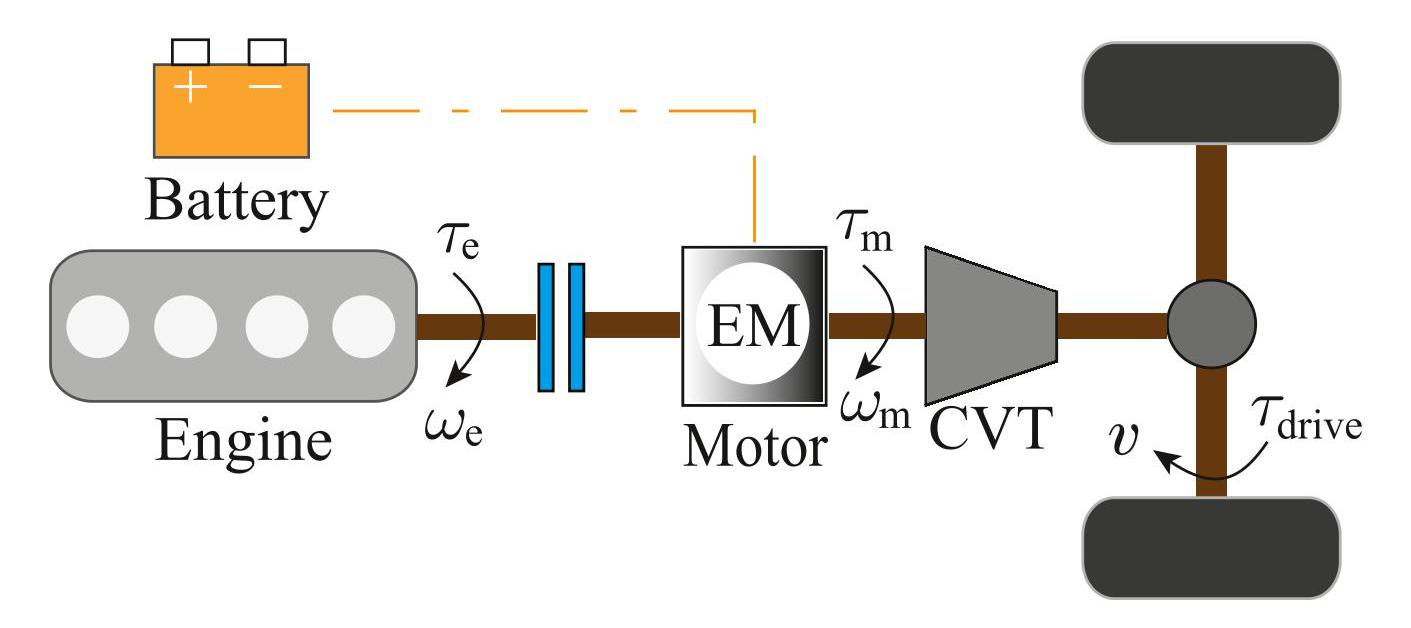
Fig.1Powertrain structure of parallel HEV
The static fuel consumption rate of engine (g/s) is seen to be dependent on the engine torque τe and engine speed ωe and it is identified as a nonlinear function of τe and ωe (rad) in the following equation:
(1)
where aj (j = 0, 1, · · ·, 5) are parameters identified through real engine data.
The electricity consumption rate (kWh/s) is defined as the motor power, which is dependent on the motor torque τm and motor speed ωm in the following form:
(2)
where ηe demotes the efficiency of motor. The dynamic of SOC in battery is not considered under the assumption that the SOC in the look-ahead horizon is a fixed parameter because the SOC does not change much in a short distance when the battery capacity is large [27] .
The fuel consumption rate and electricity consumption rate in the time domain is transformed into that in the space domain as follows:
(3)
where and are used to represent fuel cost rate and electricity cost rate. There is vehicle speed v in the denominator and v >0.
2.2 Vehicle model
The resistance force Fresis, consisting of slope resistance, rolling resistance and air resistance is calculated as follows:
(4)
where M, g, µ, ρ, Cd, A represent vehicle mass, gravitational acceleration, rolling coefficient, air density, drag coefficient, and frontal area, respectively.
The driving force Fdrive is achieved by the sum of engine force and motor force determined as follows:
(5)
where ig, i0, ηf and Rtire represent CVT gearbox ratio, differential ratio, transmission efficiency and tire radius, respectively.
The dynamics of vehicle speed is dependent on the driving force Fdrive and resistance force Fresis,
(6)
In summary, when engine torque τe and continuous variable transmission ratio ig are determined, the motor torque τm can be calculated as follows:
(7)
Moreover, the engine speed ωe and motor speed ωm in HEV mode have the following relastionship between ig and v:
(8)
2.3 Distance headway model
The distance headway x between the ego vehicle and its preceding vehicle is dependent on the ego vehicle speed v and preceding vehicle speed vp, which is described in the following equation:
(9)
For the driving safety of the ego vehicle, the distance headway x should satisfy the following inequality constraint in the longitude direction:
(10)
where h and xmin denote the time headway or the driver reaction time and minimization limitation of x.
Similarly to Eq. (3) , the dynamic function of x is also converted from the time domain to the space domain, and it is described as follows:
(11)
where the ego vehicle speed v should satisfy the speed limitation rule on the road,
(12)
2.4 Traffic density model
In this paper, the traffic density is defined as the vehicle number with the look-ahead horizon. For a fixed look-ahead horizon distance, the number of vehicles that go to or leave from the queue determines the traffic density on this horizon. A Paynes second-order traffic flow model is employed to describe the dynamics of traffic density where there is no road section on-ramps or off-ramps along this road [29] . Under this assumption, the partial derivative of traffic density ρtr with respect to distance is zero and ρtr dynamic is described asfollows:
(13)
where ∆q denotes the vehicle number increment in the look-ahead horizon.
3 Look-ahead Horizon-based EMS
3.1 Problem formulation
The energy consumption rate in this paper is seen as the total monetary consumption of fuel in engine and electricity in the motor. g1 and g2 denote the energy consumption and time consumption, described as follows:
(14)
where γf (U/L) and γe (U/kWh) represent the prices of fuel and electricity, respectively. ρf (L/g) is the fuel mass conversion rate.
(15)
where it is obtained through ds = vdt from the time domain to the space domain.
Conclusively, the optimization problem formulated is written as follows:
(16)
where the control inputs are selected as v and τe because they are used to optimize the efficiencies of vehicle and powertrain. The state variable is distance headway x and the disturbance input is the preceding vehicle speed. There are physical inequality constraints of vehicle speed v and engine torque τe, which is seen as the limitation of control input. Moreover, the defined constraint about distance headway x and vehicle speed v is considered. This constraint has the relationship between state variable and control input, which is seen as a mixed constraint. Since there is a limitation of maximum power provided by the engine and motor, the derivation of speed |∆v| should satisfy δv.
The gear ratio of CVT ig is achieved through a rule-based control scheme depending on the ego vehicle speed v [28],
(17)
The main work to deal with the optimization problem with outside disturbance in Eq. (16) includes two parts: 1) To predict the preceding vehicle speed vp in the look-ahead horizon.2) To derive the optimal solution of vehicle speed and engine torque [v τe] T. And the following part in this section will propose the ELM-based predictor for vp and optimal controller for [v τe] T.
3.2 ELM-based predictor
The basic structure of the ELM, due to page limitation, the detailed information of ELM can be found in the references [30-31] .
In this paper, the output information of ELM is the preceding vehicle speed in the look-ahead horizon. The input information is listed in Table.1, which consists of real-time information from GPS, V2V, V2I, and ego vehicle. Based on the traffic density ρtr and vehicle number increment ∆q, ρtr in the next sampling distance can be calculated through Eq. (13) , which is helpful for the preceding vehicle speed prediction in the look-ahead horizon. Moreover, the running time of ego vehicle in the sampling distance is dependent on the planning speed, and the prediction of the preceding vehicle speed in the look-ahead horizon is dependent on the running time. In this paper, to deal with this problem, the planning speed sequence of the optimal solution in the previous sampling distance is used to determine the running time in the look-ahead horizon. That is the reason why travel time te is used as element of input for ELM-based predictor.
Table1Meaning of inputs signals for preceding vehicle speed predictor

3.3 Optimal control scheme
When the outside disturbance w in the look-ahead horizon is predicted by an ELM-based predictor, the problem in Eq. (16) among the look-ahead horizon isan optimal control problem with dynamic-model constraint, inequality constraints of v and τe and mixed inequality constraint between x and v. To solve this problem, the Pontryagin’s maximum principle (PMP) is employed in this paper. A Hamiltonian function H in the following form is employed to deal with the dynamicmodel constraint:
(18)
where p is the costate, and the detailed expression will be given.
Moreover, to deal with the inequality constraints and mixed inequality constraints in Eq. (16) , a Lagrangian function is introduced in the following form [32] :
(19)
where δ11, δ11, δ21 and δ22 are the multipliers and wv is written as follows:
(20)
With determination of Lagrangian function L, the expression of costate p is given as follows:
(21)
Since there is no terminal cost Φ (x (sf) ) in Eq. (16) , the terminal costate p (sf) is set as zero due to the following equation:
(22)
With the above analysis, the following optimal conditions should be satisfied for the optimal control solution u ∗ = [v τe] T for Eq. (16) based on PMP:
(23)
It is not easy to derive an analytical optimal solution in Eq. (23) . There is initial condition for state variable x and terminal condition for costate p, which makes it suitable for the Newton-Raphson method to obtain the optimal solution numerically [9] . The converge of this method has been proved in [33], and due to the pagelimitation is that this paper does not introduce the proof process.
4 Simulation validation
4.1 Simulation platform setup
The simulated road in this paper is derived from a real-world traffic scenario, where the information of slope and intersection position is collected with real values in the road shown in Fig.2, which is located in Susono, Shizuoka, Japan. With these rich data, a traffic environment to simulate real-world driving condition is built in IPG CarMaker, which is a commercial software for traffic simulation. Although the road shown in Fig.2 is curved, the simulated road in the simulator is set as straight, and there is no overtaking behavior for simulation. In the data collection process, the different traffic densities in links along the route are set to generate different numbers of vehicles, and different random initial phases and reminding timing of traffic lights are set. With the above setting, the different traffic scenarios are generated.

Fig.2Map of the road shown in Google Maps
The structure of the traffic-in-the-loop powertrain simulation platform is depicted in Fig.3, which consists of a traffic simulator by IPG CarMaker and a powertrain&vehicle simulator platform by MATLAB/Simulink. In the traffic simulator, the surrounding traffic participants, including preceding vehicles, traffic light, speed limitation and slope can be simulated with a capacity of V2V and V2I information transmitted to Simulink for data-based learning and optimal control. Moreover, the industry-level powertrain model built in Simulink can emulate the powertrain dynamics of HEV. The driving torque of the powertrain is feedback to CarMaker to propel the vehicle. In this case, a closedloop traffic-in-the-loop powertrain simulation platform is set up. It should be noted that the performance of the designed energy management strategy and the hybrid powertrain will influence the ego vehicle dynamics, and the surrounding vehicles will also be influenced by the ego vehicle sequentially. The basic parameters used in the proposed optimal control scheme are listed in Table.2. It is noted that there are vehicle speed v in the denominator of the above equations and it is set as vmin = 0.1 km/h.

Fig.3Structure of traffic-in-the-loop powertrain simulation platform
4.2 Prediction results
In this subsection, the prediction results of ELM is given. The number of hidden neurons is set as 500. The sampling distance of the ELM-based predictor is set as 5 m, which is the same as that of the optimal control scheme. There are10 vp in the look-ahead horizon to be predicted, and 10 ELM modules are used for prediction with the input information listed in Table.2. The training and testing data for ELM-based predictor are collected through the map shown in Fig.2. There are10 groups are obtained for training.
Table2Basic parameters of the RHC controller

The results of RMSEs of the normalized speed and actual speed are shown in Fig.4. It is seen that both normalized and actual RMSEs increase when the prediction steps increase, where sampling distance in X label represents the prediction step from 5 m to 50 m. On the other hand, the preceding vehicle speed comparisons between actual and predicted values for different cases, including low speed increasing scenario, high speed increasing scenario, high speed sustaining scenario, and speed decreasing scenario, are shown in Fig.5. It is shown that the predicted performances for speed increasing scenarios in the look-ahead horizon are well, which are beneficial to the look-ahead horizon based optimal control scheme. Moreover, the same conclusion can be obtained in the speed-decreasing scenario. In the high-speed sustaining scenario, it is seen that there are prediction errors are less than 3 km/h, which are reasonable for an optimal control scheme.
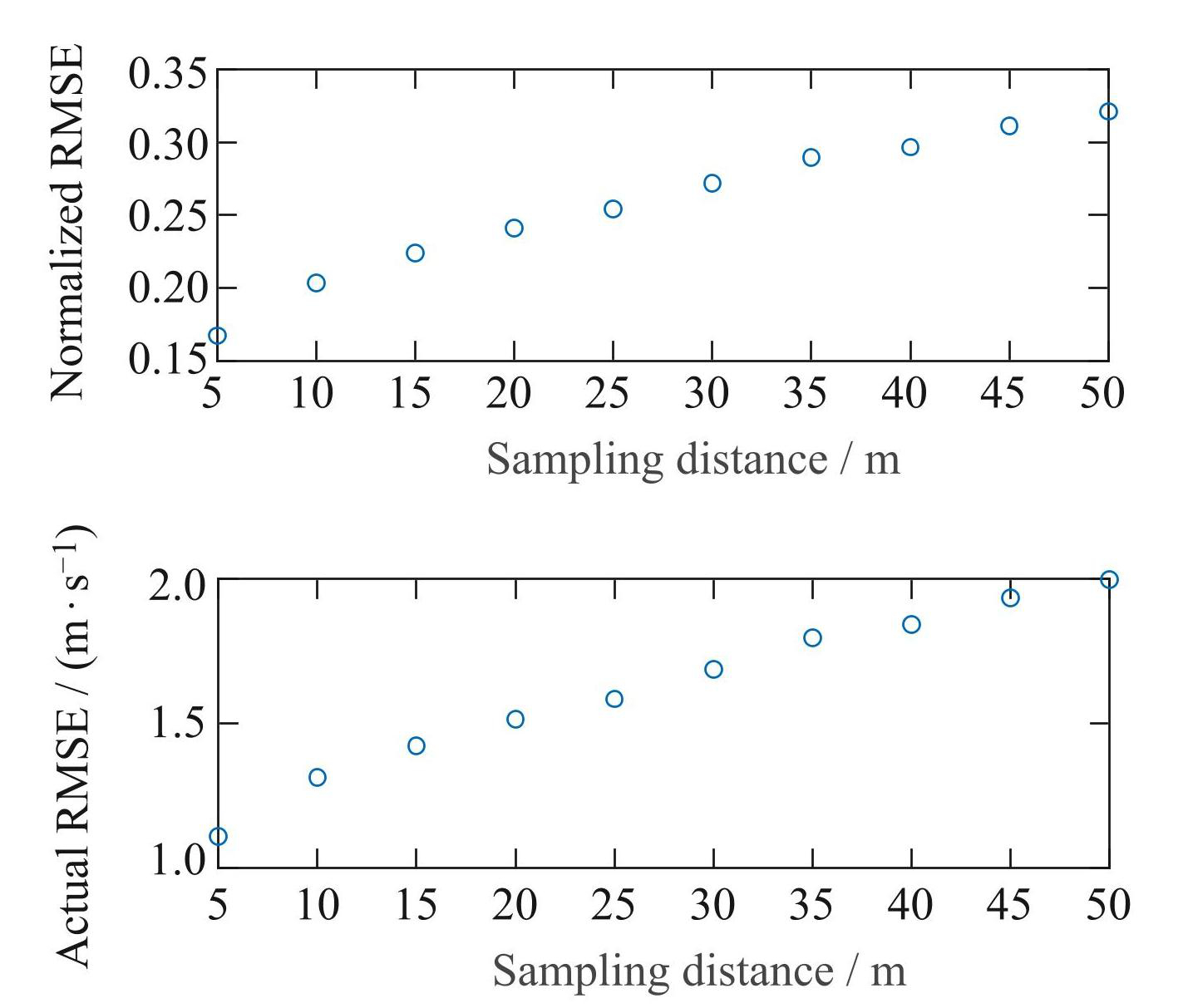
Fig.4Root mean square error of the normalized speed and actual speed in ELM-based preceding vehicle speed prediction
4.3 Optimization results
In this part, the simulations of the proposed prediction-based energy management strategy are conducted in the traffic-in-the-loop powertrain simulation platform. The simulation results of the optimal control scheme with ELM-based prediction, including headway performance, actual speed tracking, the planning speed and powertrain performance, are shown in Figs.6–8. In Fig.6, the blue line and the red line denote the preceding vehicle speed and ego vehicle speed. Moreover, the red dot line represents the minimum allowed distance headway. It is seen that the actual ego vehicle speed can track the preceding vehicle speed in both speedincreasing and speed-decreasing scenarios. With high weight factor λ, the travel time is considered so thatthe headway is maintained around the minimum value. Fig.7 shows that the torques and the speeds of the engine and motor are within the physical limitations of a hybrid powertrain. The speeds of the engine and motor are the same because the parallel powertrain works in hybrid mode.

Fig.5Preceding vehicle speed comparison between current and predicted values for different cases

Fig.6Simulation results of the slope, ego vehicle speed, and distance headway
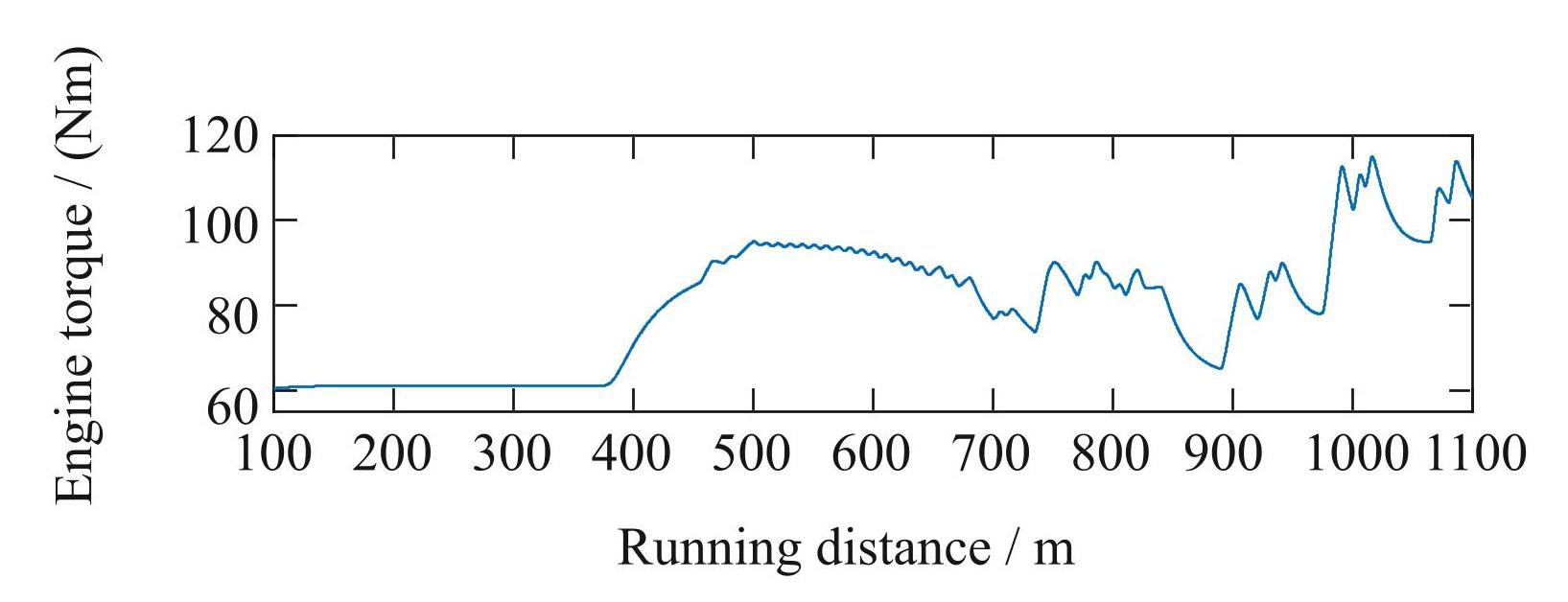

Fig.7Simulation results of torques and speeds of engine and motor

Fig.8Simulation results of fuel cost rate, electricity cost rate, and monetary cost rate
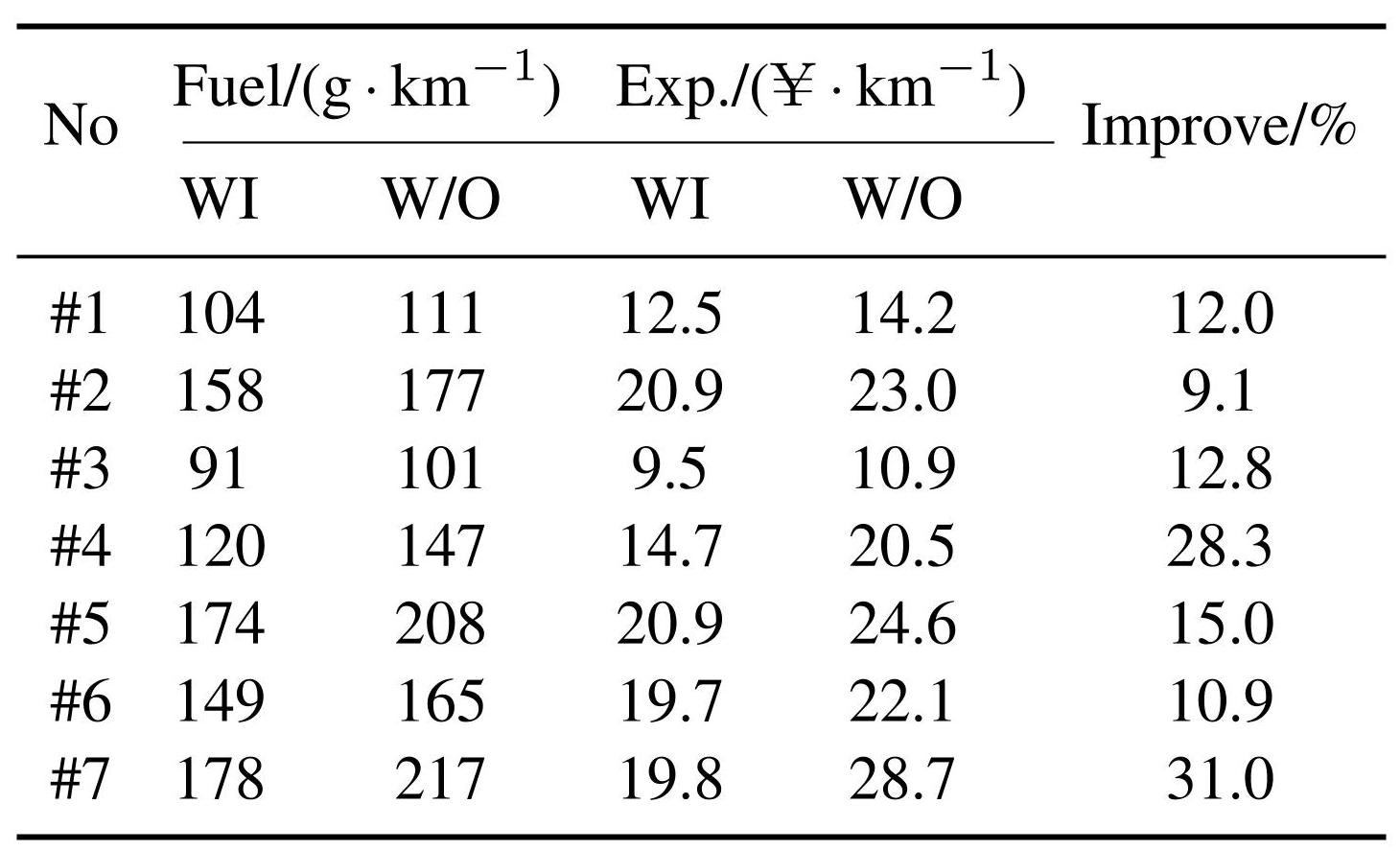
The performance comparisons between optimal control scheme with and without ELM-based preced-ing vehicle predictor are shown in Fig.9 and Fig.10, where the blue line, red line and black dot line denote the speeds without predictor, with predictor and preceding vehicle, respectively. It is seen that in the speed increasing scenario (280 ∼ 500 m) and speed decreasing scenario (500 ∼ 800 m) , the speed in the red line is smoother than the one in the blue line. The reason is that with an ELM-based predictor, the optimal control scheme can plan the ego vehicle more reasonably. Moreover, it is shown in Fig.10 that the energy consumption in the monetary sense of the red line is lower than that of blue line. Specially, the energy consumption performance comparison under different cases are also listed in Table.3. It can be concluded that the proposed look-ahead horizon optimal control with ELM-based prediction can improve the fuel economy than the optimal control without preceding vehicle speed prediction. The minimum, maximum and average performance improvement are9.1%, 31% and 17%, respectively. It is noted that the traffic densities in Case #1, Case #3 and Case #4 are lower than the others in Table.3, which means there are few vehicles ahead of the ego vehicle and the powertrain can operate in highefficiency zones more frequently.

Fig.9Performance comparison of vehicle speed and distance headway for EMS with ELM-based predictor and EMS without ELM-based predictor

Fig.10Performance comparison of fuel cost, electricity cost, and monetary cost for EMS with ELM-based predictor and EMS without ELM-based predictor
Table3Performance comparisons under energy management strategy with ELM-based prediction and without ELM-based prediction in different cases
5 Conclusion
To further improve the energy efficiency for HEVs on graded roads in connected environments, this paper proposes a real-time prediction-based energy consumption optimization strategy to regulate vehicle dynamics and the powertrain operation jointly. In particular, a look-ahead horizon-based optimal control problem is formulated for minimizing fuel consumption and electricity consumption in the space domain under dynamic-model constraints and inequality constraints. Moreover, the preceding vehicle speed in the look-ahead horizon, which is seen as a disturbance in this problem, is predicted through an extreme learning machine approach with real-time data from V2V and V2I. The optimal control solution is derived from the PMP. To verify the effectiveness of the proposedcontrol scheme, a traffic-in-the-loop powertrain simulation platform is built. Compared to the optimal control scheme with only current disturbance being available, it is concluded that the energy optimal control with prediction can track the preceding vehicle in smooth mode thereby improving fuel economy further. Especially, the average fuel economy improvement across 7 different traffic scenarios described in monetary terms is 17%. In the future, the proposed algorithm will be applied to the real-world HEV to show the real-time application and the performance comparison with the current on-board algorithm will be conducted to quantitatively analyze the improvement of proposed algorithm.